
How to stop missing customer calls at your business
To stop missing calls, every call needs somewhere useful to go when nobody can pick up: someone who is free, call forwarding or an AI receptionist that answers for you. If calls slip through now and then, it's enough to sort out who answers the phone. If they're missed in the middle of the rush or after hours, you need something that answers and deals with the request on its own.
David Zafra · · 10 min read ·
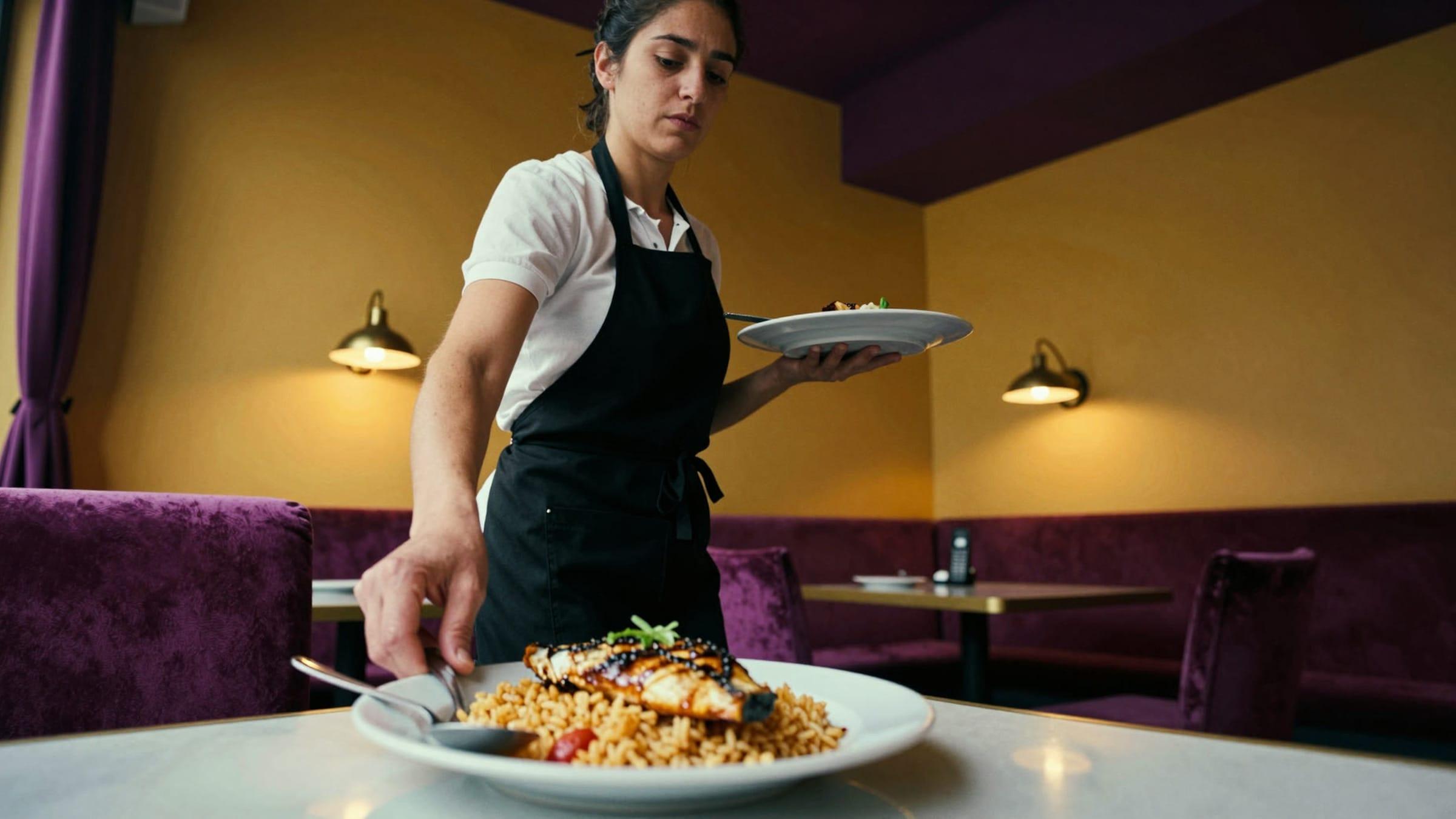
- Calls get missed at the busiest moments, not through carelessness.
- Voicemail keeps the message, but the request is still waiting to be dealt with.
- Forwarding helps if someone is free; if the whole team is busy, it doesn't.
- An AI receptionist answers, books the appointment and leaves it confirmed, at night too.
- Before choosing, count the calls in a normal week.
Why do businesses miss calls?
Because they come in just when the team can't pick up.
- The restaurant is flat out in the middle of service.
- The hairdresser is applying a colour.
- The mechanic is under a car.
- At the clinic, reception is looking after the person at the desk.
- The business has already shut for the day and the customer wants to book.
- Two or three calls come in at once.
In hospitality, the data shows it. At the 46 restaurants that use digafood, more than 4 in 10 calls come in mid-service, from 13:00 to 16:00 and from 20:00 to 23:00. More than 1 in 4 comes in between services, from 16:00 to 20:00. These are heydiga figures from 16 September to 15 October 2026.
People who call usually want a quick answer: whether there's a free slot, how much a service costs, changing an appointment. And many of those calls come in while the team is serving other customers.

What happens when you don't answer a call?
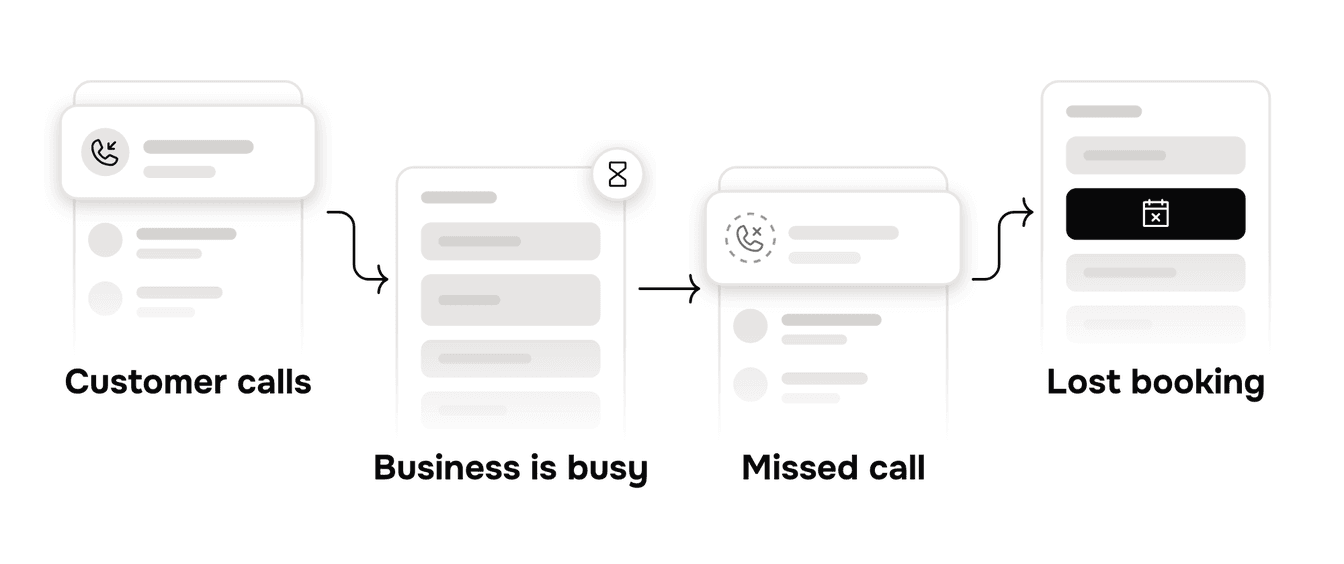
Sometimes they call back, sometimes they send a WhatsApp, and sometimes they call the business next door.
That's why it's hard to measure. Nothing visibly breaks: the phone stops ringing and the day goes on. But behind that call there could have been a booking, an appointment or a new customer.
Then there's the work that comes afterwards. Someone has to spot the missed call, find a moment, call back and note down what happens. By then, the customer may no longer pick up or may already have booked somewhere else.
What can you do to stop missing calls?
Start with the simplest option that fixes the real cause. These are the six most common ones.
1. Make it clear who answers the phone on each shift
“Whoever's free” sounds flexible, but it usually means nobody picks up. Put a name to each part of the day.
Right for you if: the team is small and calls are predictable.
2. Forward calls to another person or another location
When the main line is busy, the call goes through to another phone. It cuts missed calls, but it doesn't help if the whole team is busy at the same time.
Right for you if: there's always someone with their hands free.
3. Have a process for returning calls
Decide how quickly a missed call is returned, who does it and where the outcome is recorded. A to-do list only works if someone is in charge of it.
Right for you if: you get few calls and they aren't urgent.
4. Let customers sort out the simple things themselves
Online booking through your calendar software, such as Booksy, Treatwell, TheFork or CoverManager, and a website with your opening hours and prices take away repeat calls. It works for people who already know what they want. Anyone with a question or in a hurry still calls.
Right for you if: your bookings are simple and the questions are always the same.
5. Cover calls outside opening hours
Voicemail takes the message, but dealing with it is left until tomorrow. If people often call you at night or at the weekend, you're better off with something that answers and gets the booking made there and then.
Right for you if: you have demand when the business is closed.
6. Use an AI receptionist
It answers when the team is busy or the business is closed. It understands why the person is calling and handles the usual requests: it books, changes and cancels appointments, answers questions or takes down details.
Right for you if: you run a busy service business, have several locations or get lots of repeat calls.
Which option suits you?
The useful question isn't which tool has the most features. It's what needs to happen when nobody can answer.
| Option | What it does | When the customer gets an answer | Copes with call peaks | Right for you if |
|---|---|---|---|---|
| Voicemail | Records a message | Afterwards, when someone calls them back | No | You miss very few calls |
| Forwarding to another person | Passes the call to another phone | During opening hours, if someone is free | Not much | Someone has their hands free |
| Process for returning calls | Organises the follow-up | Later | No | You get few calls |
| Online booking | Customers book themselves | 24/7, if they know what they want | Yes, for simple bookings | Your bookings are standard |
| AI receptionist | Answers, understands and resolves | 24/7, on the same call | Yes | You're very busy or have several locations |
How do you connect an AI receptionist without changing your number?
With call forwarding from your line: the number stays yours.
You decide which calls go to the receptionist:
- All of them. It always answers and passes the call to a person when needed.
- Out-of-hours calls. During the day your team answers; when you close, it does.
- Only the ones you can't get to. If nobody picks up, it answers.
Forwarding is switched on with your phone provider. The codes differ between mobile and landline and from one provider to another, so check your provider's help pages or ask them before you switch it on.
What should an AI receptionist be able to do?
More than pick up the phone and take a message. It has to know your business well enough to resolve things.
| What it does | Why it matters |
|---|---|
| Speaks naturally | Callers talk normally, with no “press 1” menus. |
| Understands what the caller wants | It can tell whether they want to book, change, cancel, ask something or speak to someone. |
| Uses the business's real information | Opening hours, services, prices and free slots come from your calendar, not from memory. |
| Gets the request done | The call ends with an appointment, a change or an answer. |
| Knows when to pass the call on | Anything urgent, sensitive or unusual reaches a person. |
| Says it's an AI | Callers know from the start that they're talking to a virtual assistant, as Article 50 of the EU Artificial Intelligence Act (opens in a new tab) requires. |
| Keeps a record | The team can see why each customer called and what was resolved. |
Where heydiga fits
heydiga's AI receptionist answers your business's calls and WhatsApp in a natural voice. It checks real availability and books, changes and cancels appointments. When it doesn't know something, it says so and passes the call to a person.
- At a restaurant, it confirms the table while the team is in service.
- At a hair salon, it moves the appointment while the stylist is with a client.
- At a garage, it takes the car's details and finds a slot without pulling the mechanic out of the pit.
- At a dental clinic, it looks after callers while reception is with a patient.
It works on top of the software you already use: Booksy, Koibox, Treatwell, CoverManager, TheFork or Doctoralia, among other integrations. No change of number and nothing to install. Plans start at Diga Lite: €49 a month excl. VAT, with 200 minutes. No lock-in.
How do you know it's working?
Don't judge it by whether the phone rings less. Look at what happens to the calls.
- How many are answered.
- How many are resolved without a callback.
- How many bookings come in out of hours.
- How much time the team spends returning calls.
- How many have to be passed to a person.
If it's going well, the team has fewer interruptions and fewer loose ends at the end of the day, and customers get an answer sooner.

A first step: count the calls in one week
Before signing up for anything, note down over a normal week:
- How many calls are missed.
- What time they come in.
- Why people call: to book, to change something, to ask, something else.
- How many need a person and how many are always the same thing.
- How much time goes on returning calls.
With that, you'll know whether a change of routine is enough or you need something that answers for you. If the missed calls cluster in your busiest hours, look at the call peaks use case. If they cluster after you close, the one on after-hours calls.
Frequently asked questions
Why do customers call instead of booking online?
Because they're in a hurry, have a question or a specific request. Online booking works for simple things; when customers want to confirm something or are after a particular time, they'd rather talk.
Does voicemail work for missed calls?
It's better than letting the phone ring, but it doesn't resolve anything. The customer is still waiting and your team still has to call back. With very few calls it may be enough; with many, it piles up.
Can an AI answer my business's calls?
Yes. An AI receptionist answers, understands what the caller is asking for and follows your business's rules. It books appointments, changes bookings, answers questions, takes details or passes the call to a person when needed.
Will customers know they're talking to an AI?
Yes. heydiga's AI receptionist introduces itself as a virtual assistant from the very start, as the EU AI Act requires.
Does it answer out of hours too?
Yes, it's one of its clearest uses. It answers at night, at weekends and on public holidays, and puts the appointment in your calendar before hanging up.
Is it going to replace my team?
That's not the idea. It takes the repetitive and urgent calls so your team can look after the people in front of them. And it passes the call to a person when judgement is needed.
What happens when it doesn't know the answer?
It doesn't improvise: it never makes up a price, opening hours or an appointment. It says so and passes the call to a person or takes a message.
Does it only make sense for big businesses?
No. A small business feels every missed call more, because each person is already doing several things at once. Groups with several locations also gain because every call is handled the same way.
Sources
- Regulation (EU) 2024/1689 on artificial intelligence, Article 50, Official Journal of the EU, 2024, on the BOE (opens in a new tab), Spain's official state gazette.
- Restaurant calls by time of day: heydiga data, 6,171 calls at 46 restaurants that use digafood, from 16 September to 15 October 2026.
- Features, forwarding modes and prices: heydiga.com, frequently asked questions and pricing, accessed on 28 October 2026.
How it was written: written with the help of AI tools; reviewed and verified by the heydiga team.